The challenge
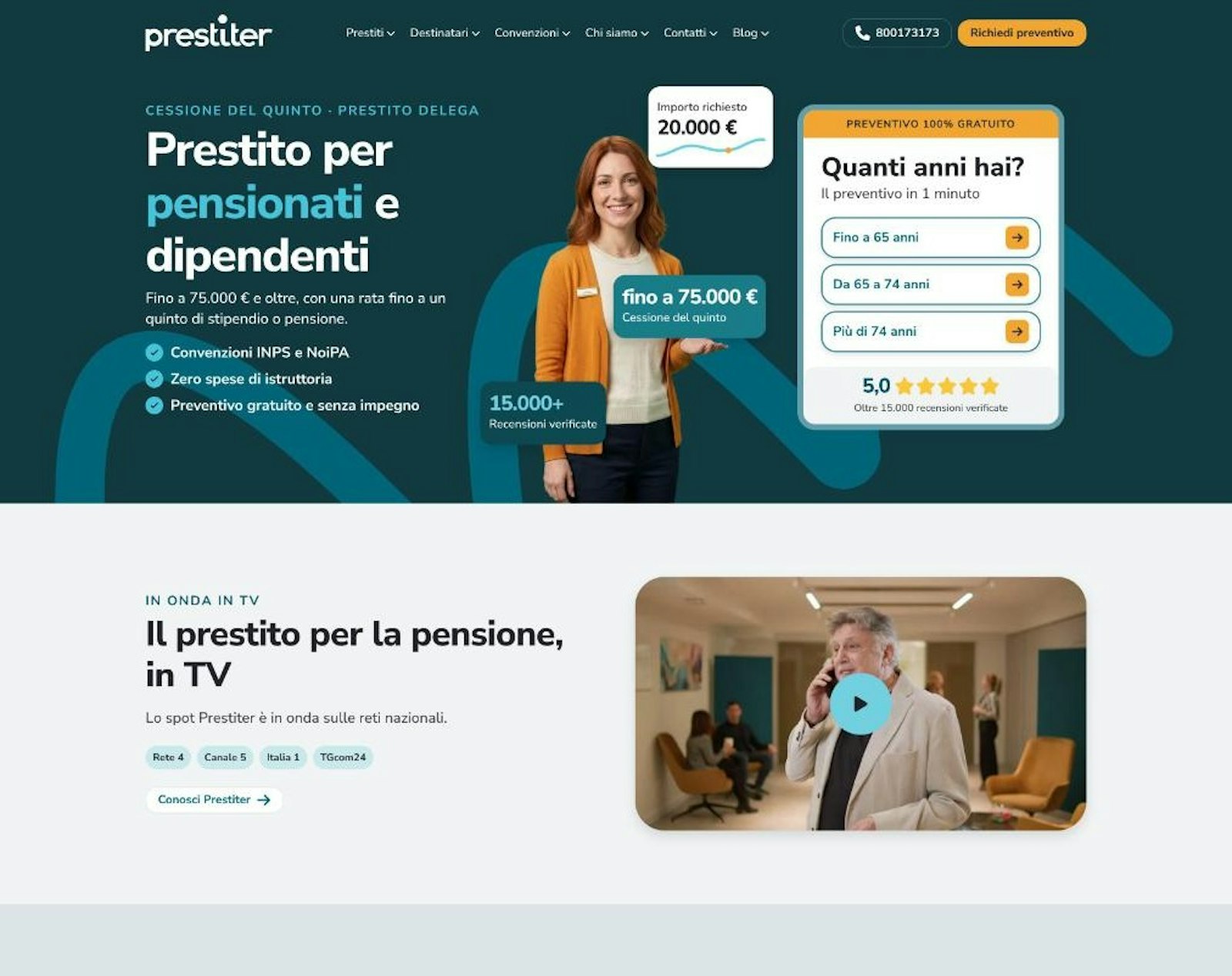
Prestiter has been arranging salary- and pension-backed loans (cessione del quinto) in Italy for more than 25 years, with 24 branches and more than 250,000 people served. Its previous website ran on WordPress with a visual page builder. Prestiter wanted a site its marketing team could update without developers, one design system across more than twenty product, audience and agreement pages, and a reliable way to handle regulated content such as representative loan examples.
What we built
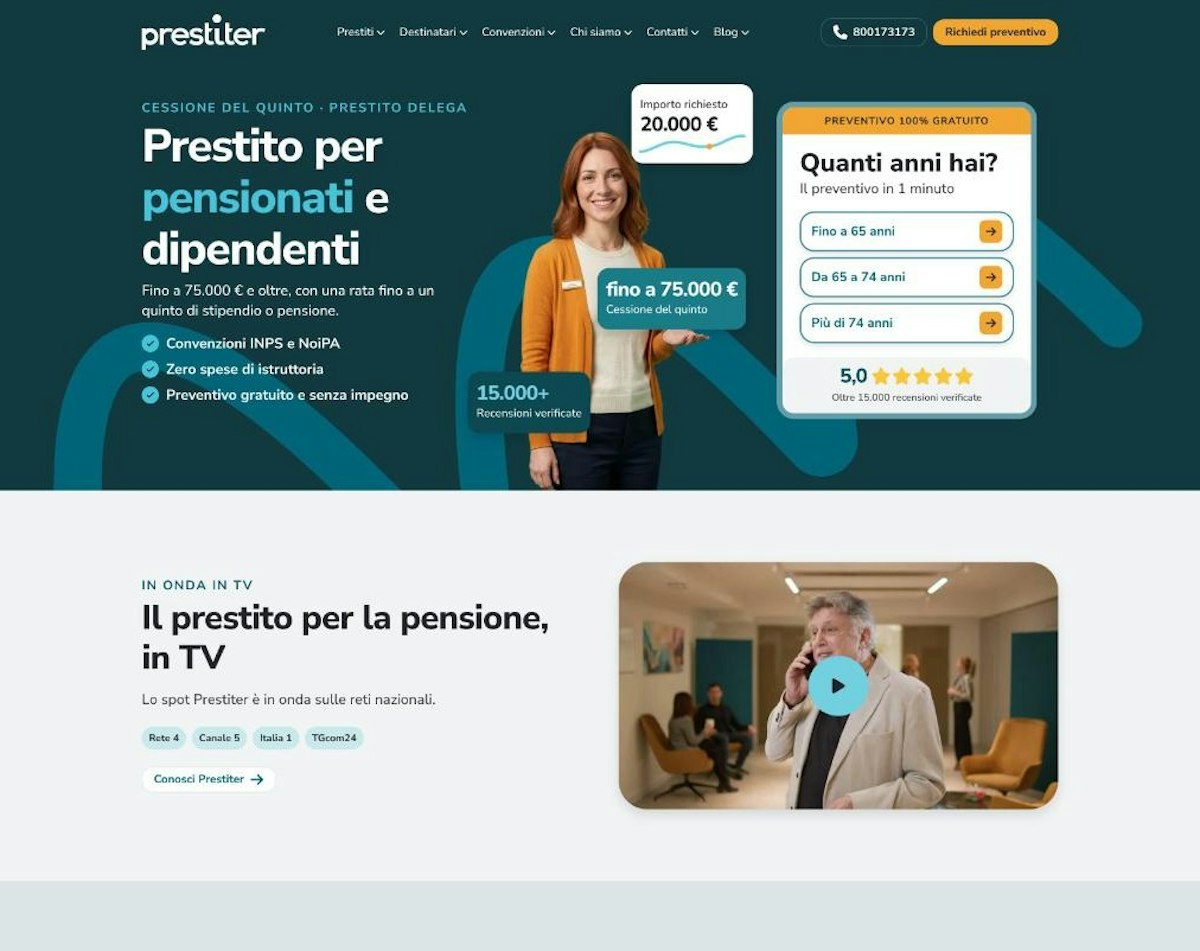
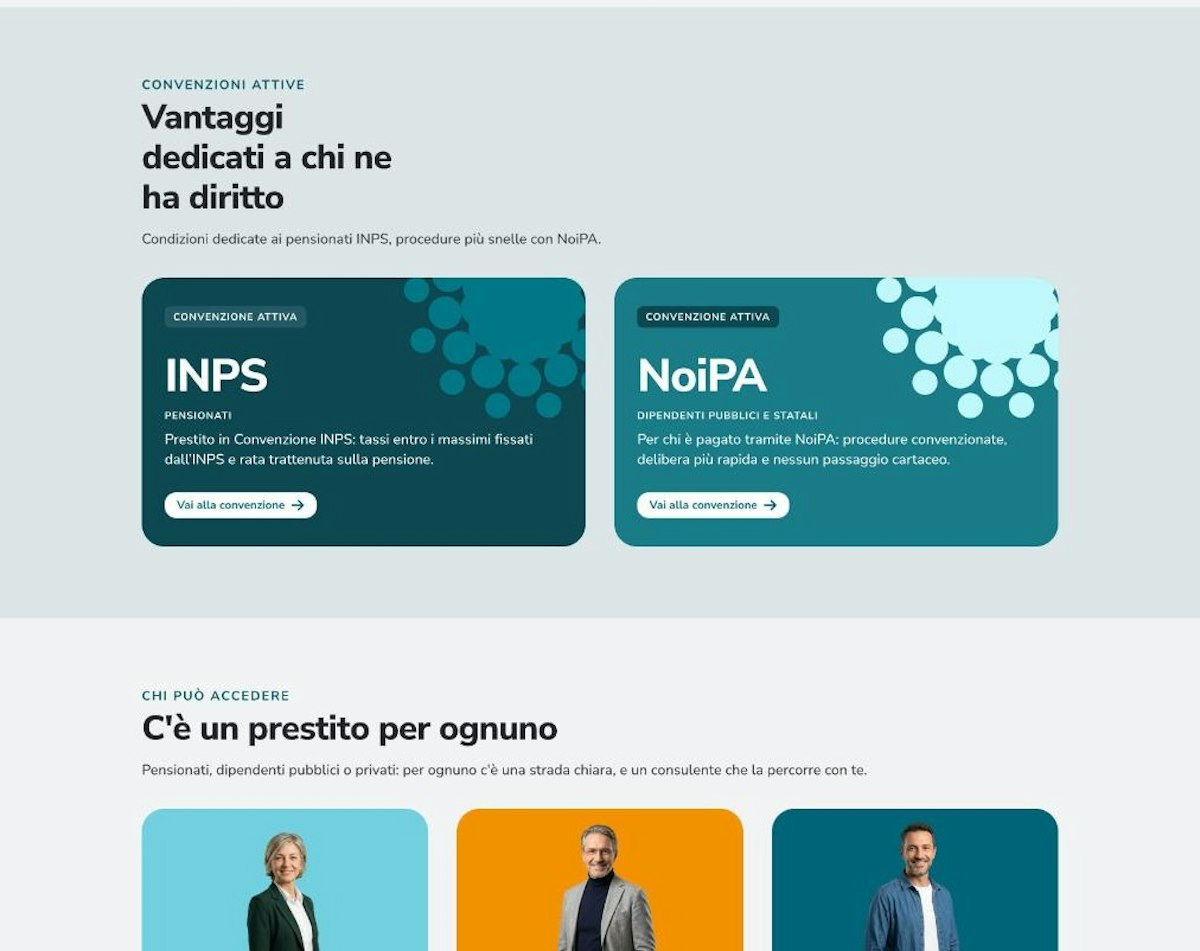
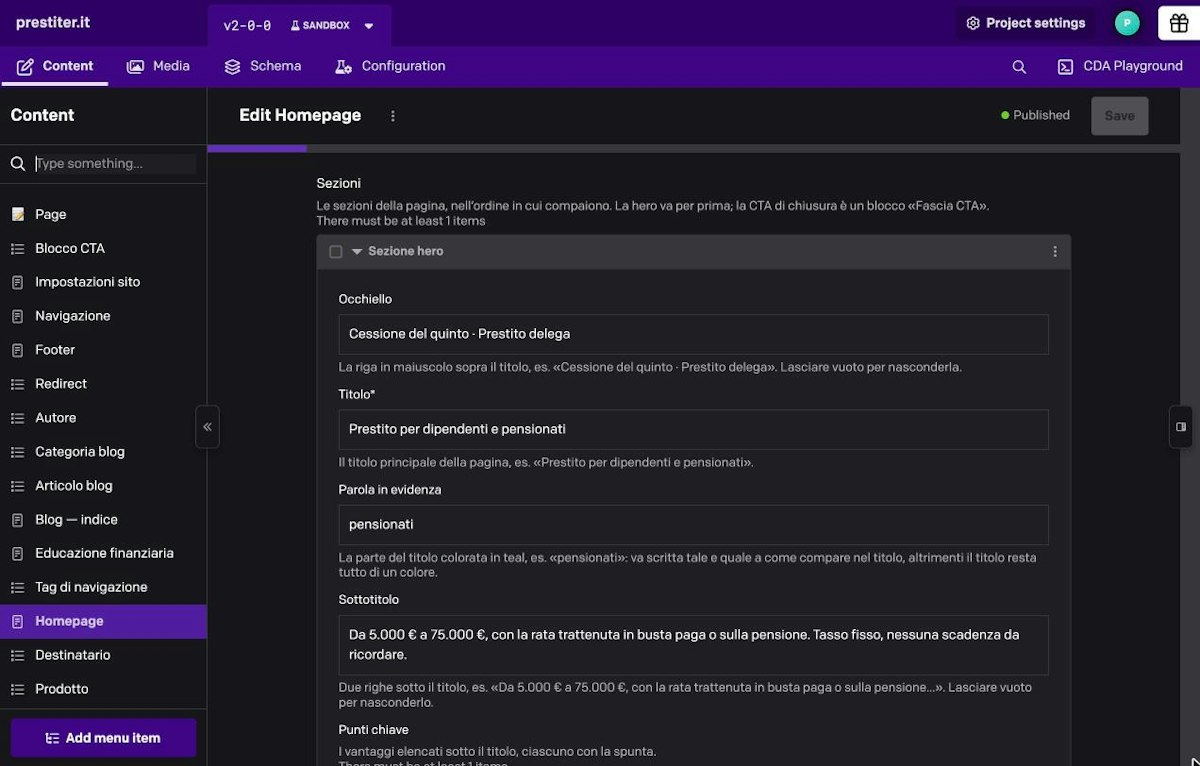
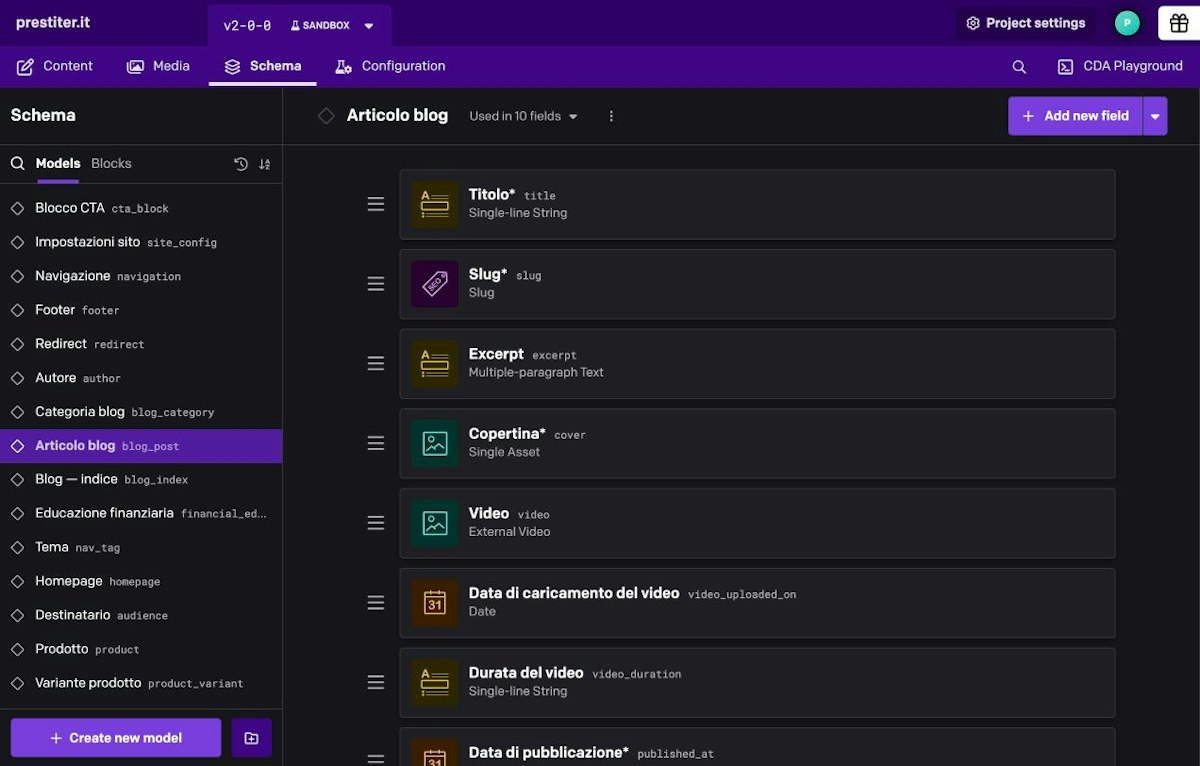
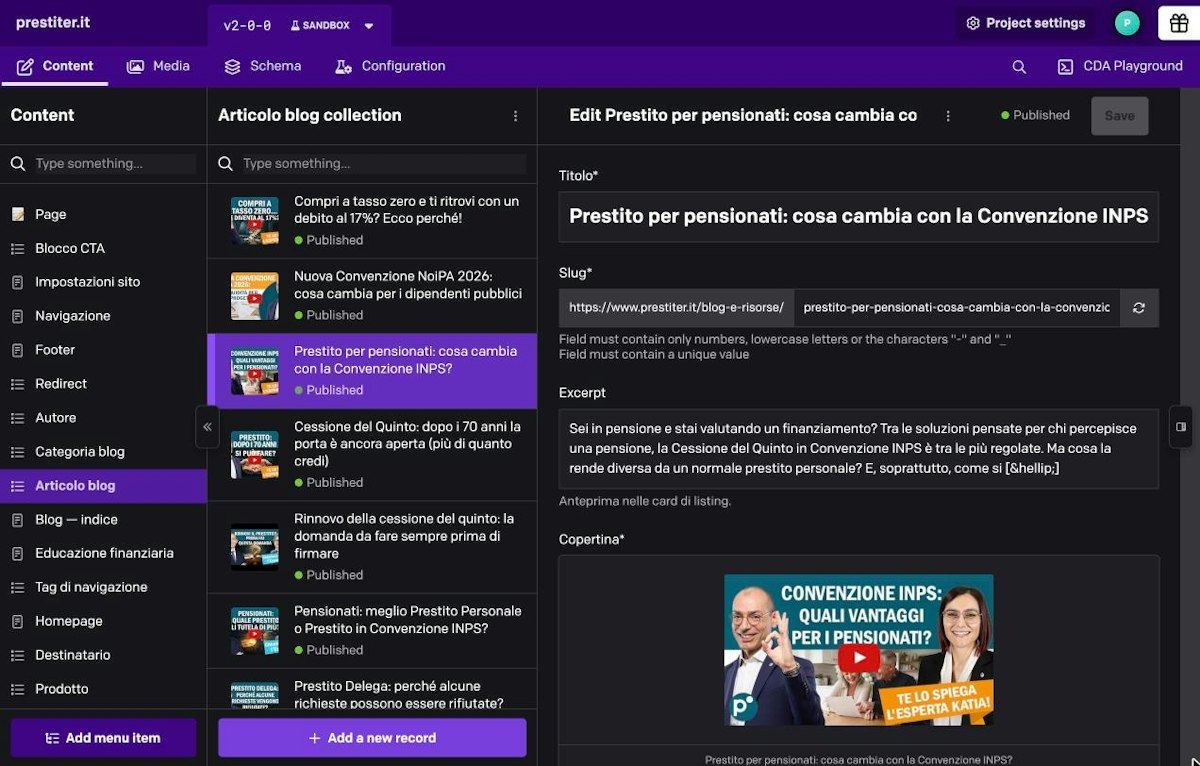
Content model. About 25 models and more than 60 reusable blocks. The homepage and the product, audience and agreement pages are composed from modular sections: hero, card grids, steps, figures, reviews, FAQ, certifications, CTA bands. Every field carries a short hint in Italian, so editors know what goes where.
Regulated content as data. Representative loan examples (amount, instalments, TAN, TAEG) are records of their own and are embedded where needed, so one update reaches every page that shows them.
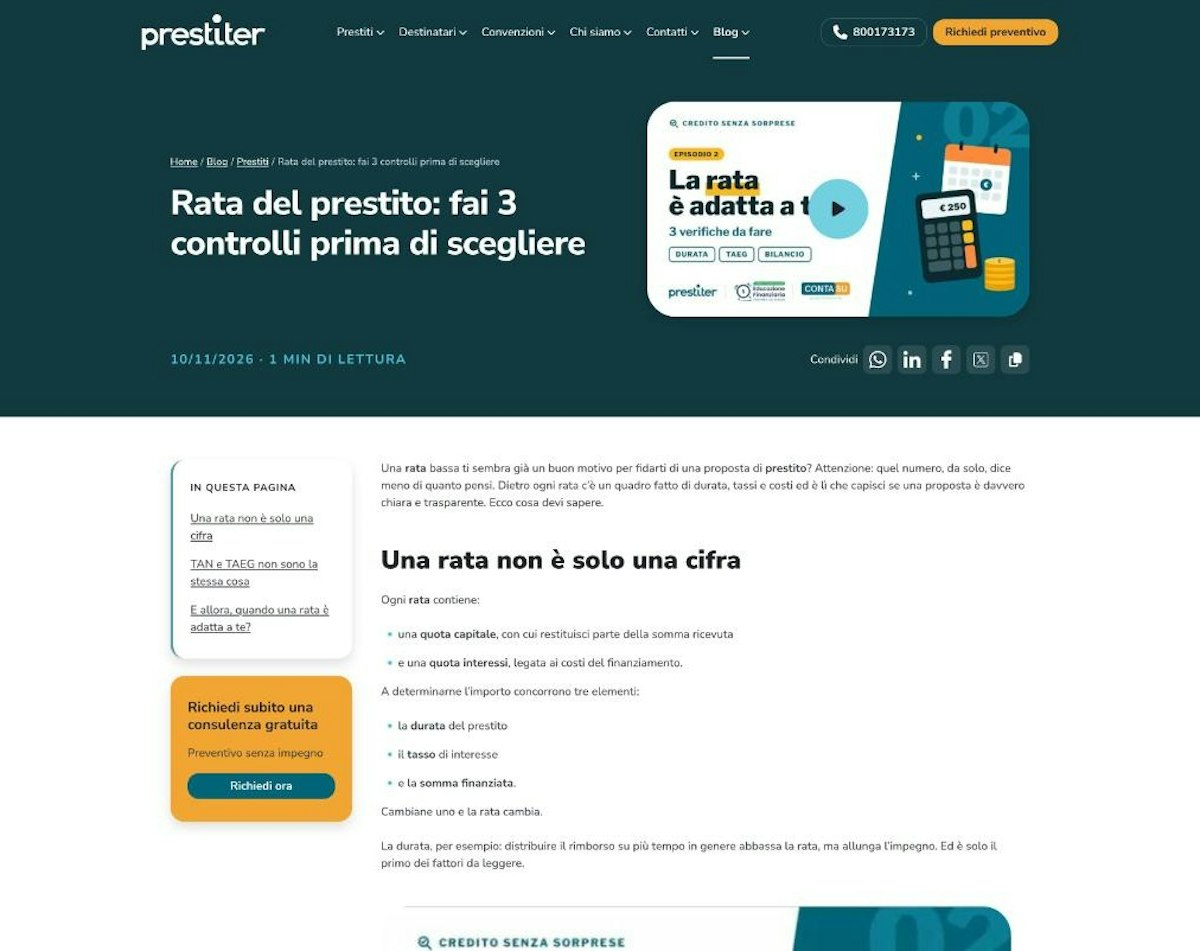
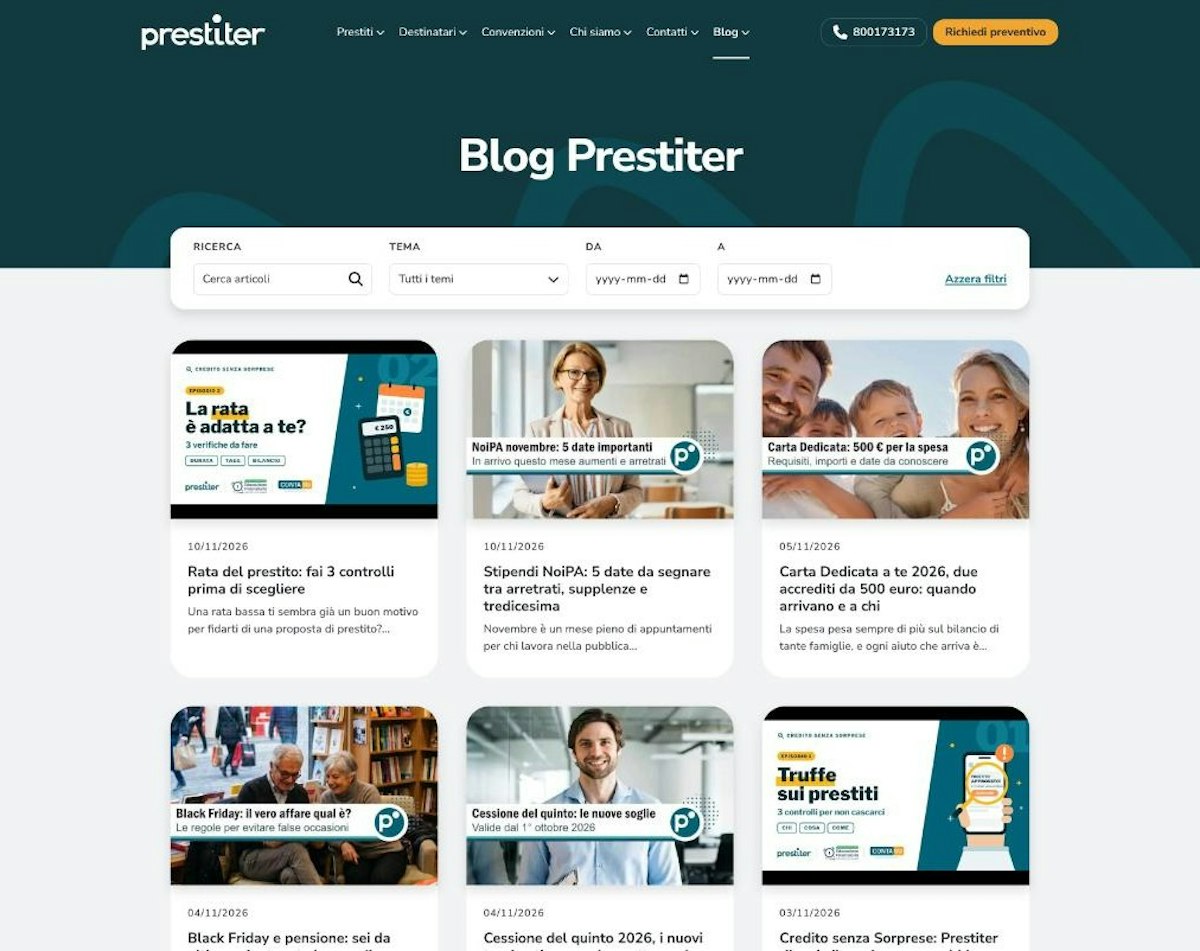
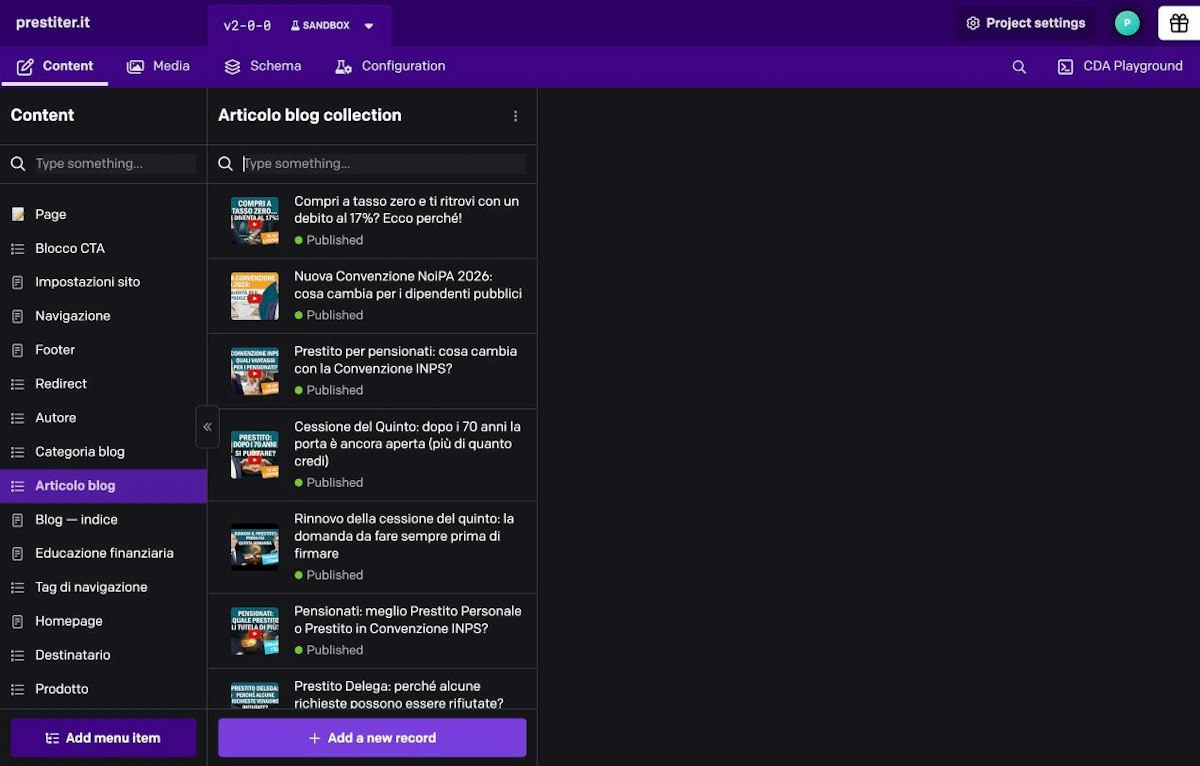
Blog. Articles use Structured Text with embedded images, galleries, videos and inline CTAs. Categories and navigation tags drive URLs, breadcrumbs and related posts; the table of contents is generated from the headings.
Site chrome in the CMS. Header menus, footer, site settings and redirects are managed in DatoCMS too.
Front-end and delivery. Astro with a React component library built on design tokens, deployed on Cloudflare Workers. Each pull request gets its own preview URL, and the test suite runs in CI before every build.
Safe schema changes. Model changes are prepared in a sandbox environment and applied with migrations through the DatoCMS CLI.
How we worked
OKR Business ran the technology selection and designed the architecture, then delivered the site with a senior developer, reviewing the work together with Prestiter's in-house team. We used Claude Code, guided by a project-specific instructions file, for parts of the implementation; every change still went through code review.
What we learned
Writing a hint for every field takes time, and it saves many questions from editors later.
Sandbox environments and migrations turn schema changes into a routine step.
Preview links on every pull request make business review fast: stakeholders check the real page, not a mockup.